Our Struggles … in the Heavens

Some things we experience are so disturbing, for example battles between peoples, the arising of wars, but also fights between individuals, and even struggels within ourselves, that it is difficult to find an explanation, a way to understand. In this distress, the Bible offers a way of interpretation:

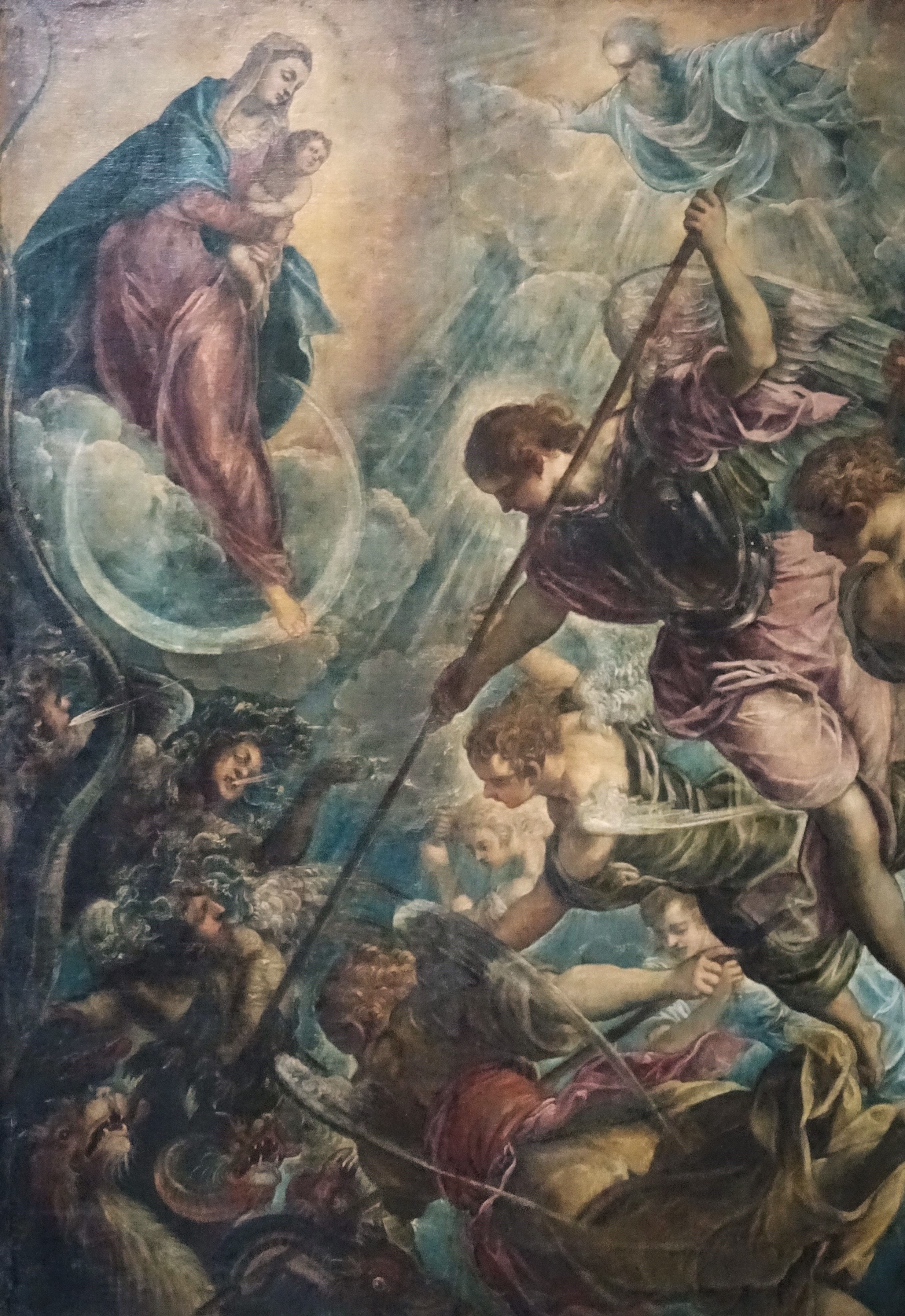
“For our struggle is not with flesh and blood but with the principalities, with the powers, with the world rulers of this present darkness, with the evil spirits in the heavens.” (Eph 6:12)

The enormity of strife and terror can be so overwhelming that an explanation within the framework of our worldly categories is not sufficient in order to comprehend and understand. It is some consolation for us to believe that what is fought out on earth has a counterpart in the spiritual worlds, in the heavens.

“I have seen Satan fall like lightning from heaven”. (Lk 10:18), Jesus said when he rejoiced that his disciples could cast out demons in his name. If this is so, then when we see a hopeless situation on earth, we can turn to our Lord Himself to help us with His spiritual powers and fight the evil from above. This will make all the difference. We can ask him to send his Holy Spirit, whose fruit is peace, joy, gentleness, patience, and self-control, and who is stronger than any evil spirit. And we can turn to Mary, the Mother of God; at the birth of her Son angels proclaimed peace on earth. May she also intercede for us from heaven.

Holy Mary Mother of God, Mother of Grace, You are called the Queen of Peace. We bring you the whole of humanity with its fears and hopes and we ask you: Guide us all in our search for freedom and justice. Guide the steps of all people on the path of peace. Be close to those who suffer and those who flee. Be close to those who govern us to dare to take the steps of peace. O Mary, Mother of God and our Mother!
How to Deal with Divisions – in Politics, Religion, and Family

During my vacation I had the opportunity to travel and talk to many people, people with different opinions and political and religious views. My impression was confirmed that the “fronts” are hardened. Even if you want to stay in the middle ground, there is a dynamic that pushes you into one bubble or the other. For the Church, this is certainly to her disadvantage. For our countries, it probably is also. So how can we deal with the fact that we are divided? I see three ways. They each depend on how I determine distance and closeness.

1.    I keep my distance from the other group. I do not want anything to do with them. I do not agree with their views and do not see any way I can reconcile that. I am not even willing to do that, because I am convinced that there is nothing to negotiate or agree on.

>> That’s fine. Only I would recommend applying Jesus’ word: Bless those who curse you (Luke 6:28), pray for those who persecute you (Matthew 5:44). Do not curse them, but bless them. From the distance, which is best for both at the moment, I throw a small blessing across the river, just asking the Lord: Please, bless them. And then I let the Lord do it, without engaging myself.

 2.   I don’t avoid the others. Maybe I can’t. And in some ways I don’t want to, maybe because the others are part of my family or we have had a good relationship in the past, a good history together.

>> I focus on what we have in common. On common goals. I leave aside what is different and appreciate that we have grown differently. It is what it is, right now. I don’t avoid it, but I keep focusing on the things that connect us. And enjoy them.

“Is Christ divided?” (1 Cor 12:13). No, he is not.

3.   If I have a very good relationship with someone; if I really respect and appreciate him or her, I dare to raise the controversial issue. I honestly say how I see things, always speaking of myself and my experiences. Then I listen to how the other person sees it. I do not necessarily look for a harmonious outcome of the discussion and am willing to suffer from the fact that we do not come together. But we are still together.

It is worth consciously discerning what kind of closeness or distance I want to have, respecting my intuition. In all three ways, I don’t break completely with the other side, at least in my thoughts. It is not easy to have love and truth together. But if we don’t try, the division will grow, and that will not be a good end for either me or the other.

When a house is divided against itself, the house cannot stand. (Mark 3:25)

Lord, it is you who can bring us together. Through your suffering, death, and ressurection you have set us free. Be with us all. Let me pray before I speak and act. Let truth prevail. Let love prevail. Your will be done.

The Morning Kiss

Recently I was a guest in a family. I witnessed a little conversation between the husband and his wife. It was in the morning. He was about to leave for work, she was still sitting at the breakfast table. She said, “You haven’t given me a kiss yet”. She said this without resentment. She was just reminding him. He kissed her immediately. It was nothing special, nothing extraordinary, not even worth mentioning. And yet: I realized how important this ritual was for them. This kind of ritual is important for each of us. To tell someone in the morning, I love you. To show it and tell him. And to receive the same gesture; to hear: I love you.

God has given us the gift and the ability of intimacy. It is a grace to be able to express our love to the other. The same is true for our relationship with God. How could our relationship with God, who has given us this gift, be different? We can express our love for Him in similar ways: a little morning prayer, a little “hello” to God, the kiss on the icon. Everyone has his or her own way.

When the soul receives a kiss from the Godhead, it stands in complete perfection and bliss. (Meister Eckhart, DW I,172-4.6)

Intimacy needs signs and gestures. The daily kiss does not have to be overly authentic. I can’t fully express what my innermost is every day. The ritual is important, the fact that I just do it. It has an effect. Its regularity as an effect. It is to remind me, God loves me. He loved me yesterday, He loves me today, and He will love me tomorrow. I want to hear that from Him every day. I need it. And I think he wants to hear it from me, too. We should not miss our “morning kiss” with Him. I should do it even if I don’t feel like it. Feelings change. His love remains.

He may kiss me with kisses of his mouth! Yes, your love is more beautiful than wine. (Song of Songs 1:2)

Lord, you asked Peter: Do you love me? You wanted to hear from his love. He answered, Yes, I love you; you know that I love you. I pray with his words: “Lord, you know everything; you know that I love you.” Show me your love and tenderness, every day.

What can I offer personally?

At the center of the Holy Eucharist is the offertory. What can I offer? I can certainly give money in the collection. But the offertory invites us to go deeper. Just as Christ offers himself, I am invited to give myself as well. I can offer myself, personally.

It is not difficult. I can offer my gratitude, as Psalm 116:17 suggests, “I will offer a sacrifice of praise.” I can offer, in some way, who I am at this moment. My situation. And how I am feeling. Nothing is too small to offer to Jesus. Whatever I perceive in myself, Jesus wants to hear it, and he wants to accept it as my offering. Even if I feel like it’s not enough or it’s too ugly – it can become my offering that He wants to transform.

– I feel frustrated. I can offer my frustration.

– I feel fear. I put my fear on the altar.

– I am angry: I give my anger to Him.

– I am proud. I offer my pride to Him.

– I am in pain. I offer Him my pain.

– I am in despair. I offer Him my despair.

– I feel like I have nothing to give: I offer Him just that – my powerlessness, my inability to give Him anything.

Psalm 51 says: “For you do not desire sacrifice; I would give it to you. A burnt offering you would not accept. My sacrifice, O God, is a contrite spirit; a contrite, humbled heart, O God, you will not spurn.” (Psalm 51:18-19) When I give what I am, who I am, who I am at this moment, I give enough — and He will accept this as a gift and transform me. It is the humble heart that He accepts.

Lord, let me be awake at the moment of the offering. Let me give myself and hold nothing back. Look at my gift with your kind eyes. Accept me. Lift my soul to You as You lifted Your beloved Son. So let me leave the Eucharist relieved, lighter, more joyful, and filled with Your love.

What Creates Peace

The Benedictines strive for peace. Because living close together and not having peace is unbearable. What are the elements that help us live in peace? St. Benedict says in his Rule: “If you have a dispute with someone, make peace with him before the sun goes down.” (RB 4:73) It is important to address conflicts as soon as possible and not to allow the problems to accumulate. They are like a poison or become into a tension that one day explodes. That’s why we ask ourselves every night: What did I do wrong? With whom do I need to seek reconciliation? In the morning we celebrate Mass. Jesus warns us to lay down the gifts and not to celebrate if there is not yet peace with a brother or sister (Matthew 5:23-24).

Part of making peace is to forgive. May brothers and sisters don’t always treat me well. But just as they make mistakes, so do I. That is human. In order to continue to live together, I have to forgive them. If I don’t do that, not only the relationship suffers, but also I myself: I am not at peace. We can forgive each other because we know that God constantly forgives us. He forgave us first. Sometimes conflicts are so old, so deep, so complicated that we can’t just forgive in the evening. But we can pray that one day God will give us the gift to be able to forgive. It is a grace to be able to forgive.

Peace cannot not be achieved without justice. “Justice and peace will kiss each other,” says the Psalm (85:11). Reconciliation cannot happen without first looking at the facts and at the truth. This is another way to peace: to have the courage to look at the truth and to disclose it. To confront oneself and – when the time is right – the other person with the truth. Correcting each other (correctio fraterna) in addressing each other’s problems. As paradoxical as it sounds: Not avoiding conflict is also a way to peace. Otherwise, there will be a false peace, as Benedict puts it (RB 4:25). In any case, peace is a great gift from God. We should pray for it. Especially in these days.

Dear God, listen to the cry of so many people suffering from war. Look at situations where hope is lost. Help us to strive for peace in our small world, which I can influence. Give me inner peace so that it radiates from me to those around me. Let me stay close to you, because you are the source of faith, hope, love, and peace. Amen.

Only 10%

This blog post is for all those who like to give themselves away. Who like to help others, support them in any way, financially, psychologically, … but also for all those who sometimes give too much of themselves.

We are called to give ourselves as God gave Himself at the birth of Jesus, as Jesus gave Himself on the cross. He held nothing back. So in looking at Jesus, the bar for giving is set high. However, turning briefly to the Old Testament, we hear that Abraham gave his tithe to Melchizedek the priest (Gen 14:19-20); Jacob made a vow to give back 10% of everything he received from God (Gen 28:20-22); and everyone was to tithe in whatever form, animals, fruit, etc. (Lev 27:30-32). 10% sounds little against 100%. But 10% is a whole lot. If we all gave 10% of our time, resources and money to others instead of keeping it for ourselves, the world would be a better place. I wonder if we can give 100% at all. Jesus could, because he was the Son of God; his resources, at least in his divine nature, were infinite. Certainly, as a man, he gave everything, himself, his life. But he never forces us to do the same. There may be people, priests, religious, pious men and women, who try to give everything. But do they give everything? I like the idea of 10%. And if God calls you to it, you can give more.

We are invited to give because we have received so much from God. Tithing is a sign of gratitude. It emphasizes that we have no “right” to receive from God, but that it is His free gift of love. He wants us to be equally loving. You can’t measure that with a number. You can give 10% and still have a hardened heart. But I like the concreteness of that number.

It remains true what Luke writes: “Remember the words of the Lord Jesus, who himself said, ‘It is more blessed to give than to receive.'” (Acts 20:35) It is wonderful to be able to give. But having a target number can also be an expression of charity toward ourselves. It is a protection for those who usually give too much without taking care of themselves. Let’s start with 10%! Once we have done that, we understand how much 100% is.

Dear God, your generosity is boundless. You wish us the best in a way that no one else can. You love us more than we can love ourselves. I thank you for this love of yours.

Giovanni di Balduccio (1328): Charity

Prayer and Climate Change

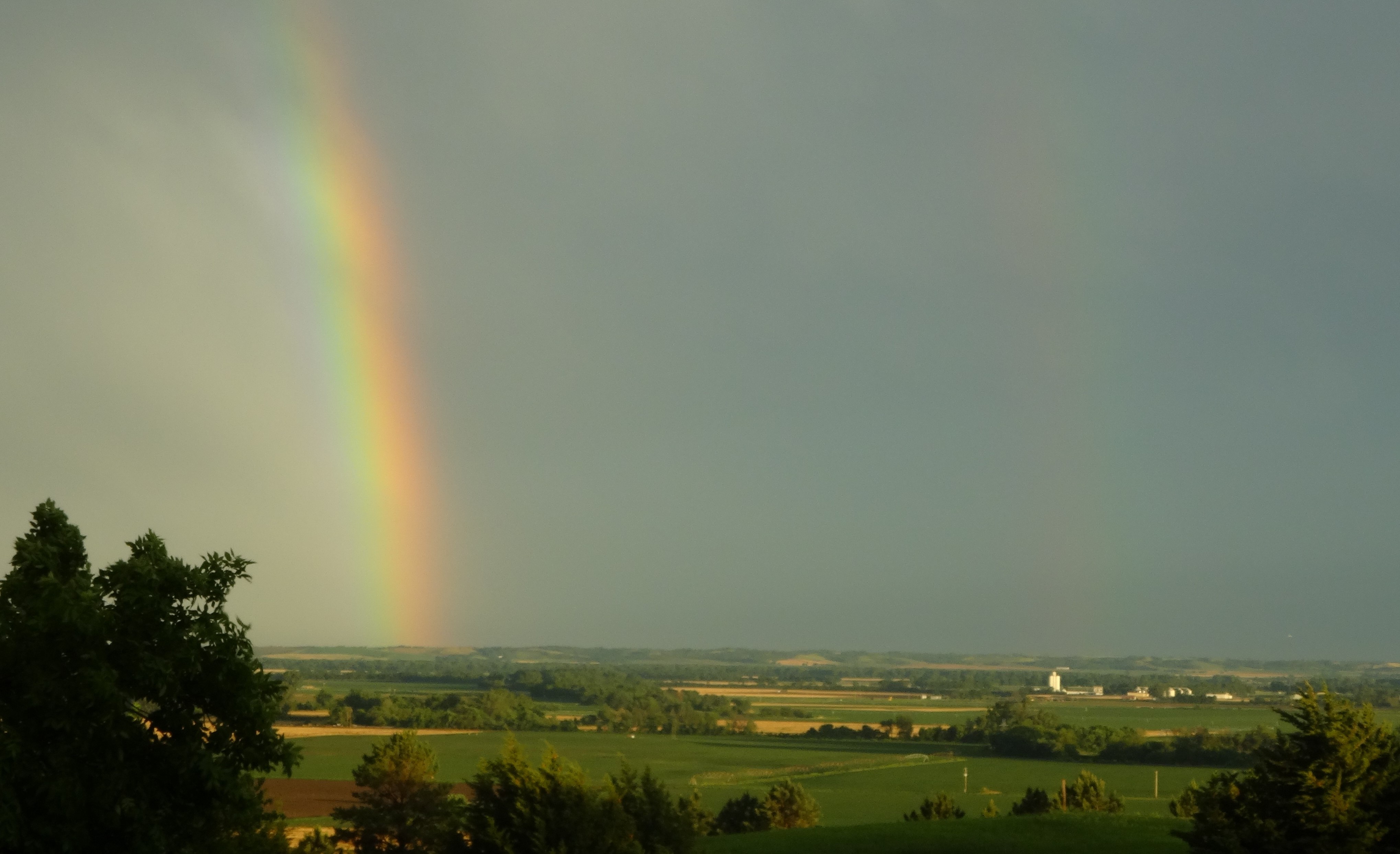
An old lady in Nebraska once shared with me something interesting. She came from a farming family and told me that when she was young, if it didn’t rain for a long time, the whole family would fall to their knees and ask God for rain. Today, she said, things are different: people look at their smartphones, “Probability of precipitation 10%,” and forget to pray because they assume it won’t rain anyway. If the forecast showed “probability of precipitation 90%”, you wouldn’t pray either, because it was somehow clear that it wouldn’t rain. In any case, people would no longer pray for favorable weather. With modern means of communication, we get the impression that we have everything under control. Is that really the case? Who has more power, God or the meteorologists? I also once heard the joke: I don’t even believe the weather report when it states afterwards what the weather was like.

On a serious note, if we look at climate change, we can say that the majority of scientists are noticing and predicting the change. And many people are doing everything they can to stop it, mitigate it, and prevent the worst of it. Others deny it or do not see it as dramatic. Have we ever thought about the fact that not everything is in our hands? Do we also pray to God, who created the heavens and the earth, who has an influence on human beings and nations, to help us so that our earth remains and becomes a good place to live? Do we trust that He has much more power than we do, that He can work miracles, that He knows things that we do not know? All this does not relieve us of our responsibility in the least. But with all the discussions, the alarming words and the defiant attitudes, it occurred to me that prayer could be something that each of us can do; and that prayer would really help in any case, as Jesus promised us.

Good God and Lord, you created everything. Your wisdom is boundless. You want this world to flourish. You want our life, yes, the fullness of life. We ask that you help us to care for our planet as best we can. We ask you to keep it in a state where we can live out your call. We ask you to prevent us humans from exploiting it so unnecessarily that future generations will not be able to live here. We ask you to take away the hubris that makes us think we have everything under control. Let us search peacefully for ways into the future. You are the Father of each one of us. Take care of us and let the climate be favorable for us.

What Is Heaven Like?

Of course, we cannot know for sure what heaven is like. How could we? But the Bible and our faith give us images. I just mention two here. A beautiful image for heaven is the wedding feast, the supper of the Lamb, the banquet.

“On this mountain the Lord of hosts will provide for all peoples a feast of rich food and choice wines, juicy, rich food and pure, choice wines.” (Is 25:6)

If you are someone who loves to eat, or let’s better say feast; if you love to be with people, to savor every course, to enjoy every detail that the cook has put into a great meal: then you know what heaven could look like. Only better!

Another beautiful image is music: the choirs of angels around the throne of God are singing. With them – we hope, by the way – the monks. “Music in the air”. If you love music, if you love to listen to it; if you love to make music, to sing, to play – then you also know what heaven is like – only better. Many walk the streets with headphones because they want the music with them all the time. When you’re surrounded by music, you see the world differently. It makes things easier, more pleasant. But how is that going to work in heaven? Because there are very different tastes in music…. Okay, everyone has their “apartment”, if we go by Jesus’ words, “In my Father’s house there are many dwelling places. If there were not, would I have told you that I am going to prepare a place for you?” (John 14:2) So I could listen to my favorite music without disturbing my neighbors? But is that heaven, sitting in my own room, isolated from others? I want the music to be heard everywhere, in public…. How God does that – I have no idea. That’s why we call it heaven or the Kingdom of God. Because we can’t make it. We can’t even imagine how to do it. God will be in control. But it will be wonderful, for me, for us, for all of us. We wouldn’t interfere with each other, on the contrary.

If you’re not so much into music or food, I’m sure you’ll have something else you love. This will be heaven for you. And much more. Well, are these thoughts too anthropocentric? What makes the difference in heaven? “And if I go and prepare a place for you, I will come again and receive you to myself, that where I am, there you may be also.” (John 14:3) That’s it: Heaven is where Jesus Christ is, where He is with me and with all His friends, His brothers and sisters. He turns to us, He turns to me as I am, He wants to be with me.

Receive me Lord, as you have promised, that I may live; and disappoint me not in my hope.

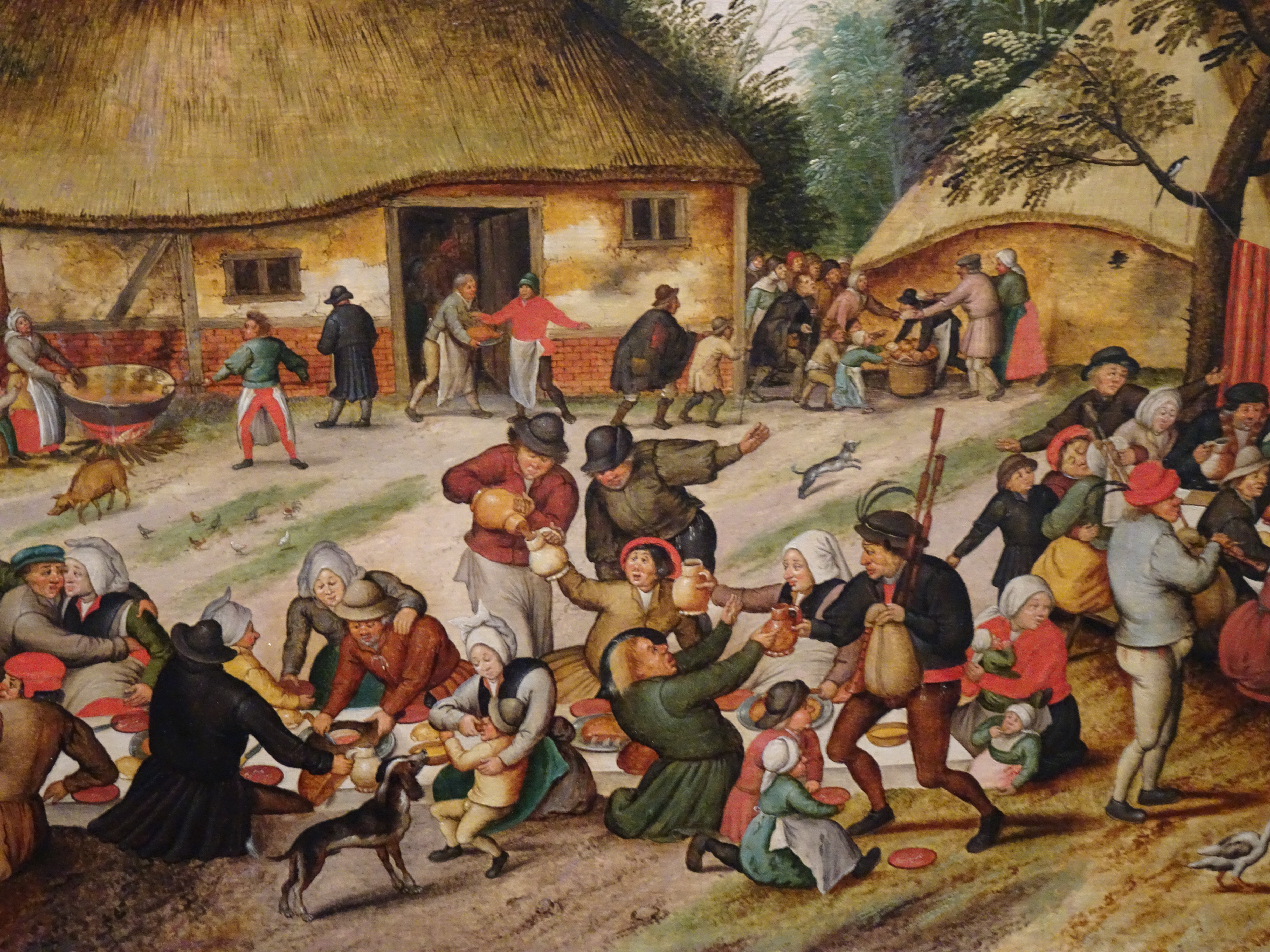
I chose the painting by Brueghel only because it contains both music and food. It may not fit with your idea of heaven…. Maybe you immagine rather silence? How do you dream about heaven?

New Skins

In times of change, when we have to decide what to keep and what to let go, we can learn from a word of Jesus. He said:

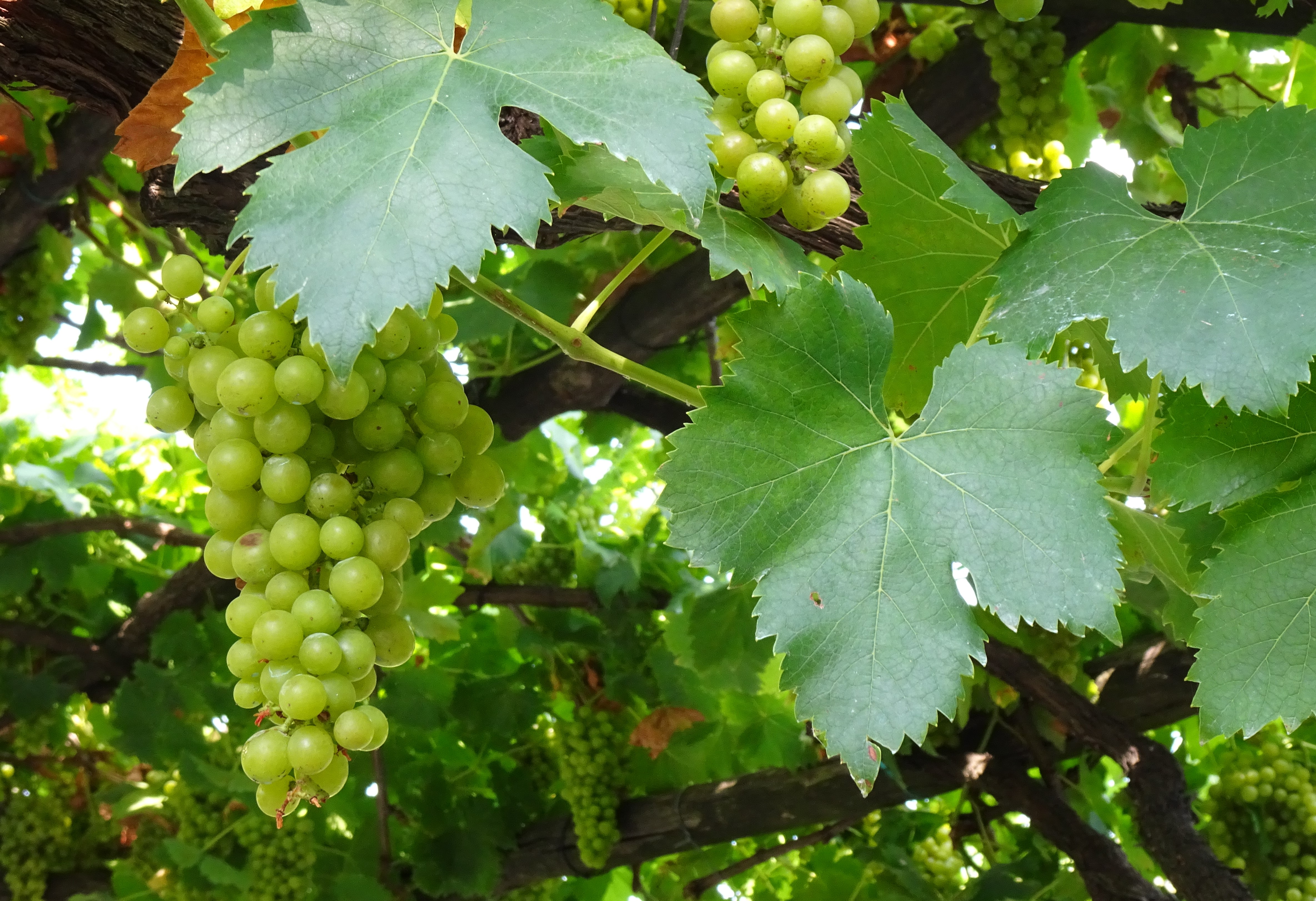
“No one pours new wine into old wineskins. Otherwise, the new wine will burst the skins, and it will be spilled, and the skins will be ruined. Rather, new wine must be poured into fresh wineskins. And no one who has been drinking old wine desires new, for he says, ‘The old is good.’”  (Luke 5:37-39)

Jesus speaks of a blessed moment: new wine is available. New possibilities open up in our lives, a new path lies before us. We should not spill this moment. While Jesus honors this situation, he also does not devalue the old: the old wine is good! If we bless both, the future and the past, each in its own way, it will go well.

What could the wineskins stand for? They could represent patterns and expectations. The old wineskins could be our habitual behavior, our typical limitations, our fears, our unhealed wounds, our memories. If we hold on to them, we will not be able to move forward. We will not be open to the new. The new wine will be spilled. We need to frame the new in a completely new way. We must let go of the old skins in order to preserve the new. We may have already made changes, but we have found that we have stumbled over our old patterns. Therefore, we doubt whether we are really able to embrace the new. For example, when we embark into in a new relationship. Jesus encourages us: Yes! New wine. Fill it into new skins!

The old wineskins could also be our own expectations. If we hold on to them, we will end up where we have been before. We are invited to find new ways to evaluate the new differently, to judge it with new standards. Perhaps, after all, the new goes far beyond my expectations. If I constantly compare the new with what I used to expect, I am still carrying the new wine in old wineskins.

Lord, you invite us to convert. You encourage us to true inner renewal. With our baptism, You have opened the door for us: We can enter into a new life, together with You. A life in fullness. You believe in us. People CAN change. I can change. I can be healed. The good remains, the new is truly new. Thank You for the freshness of this good news!

Greedy Communities

Community life means giving and taking. But some members give more, others less. That’s fine, depending on each person’s abilities. It becomes problematic when certain people have to give more all the time. The sociologist Lewis A. Coser speaks of “greedy organizations.” Such organizations depend on “sucking” their employees, their strength and energy. They are greedy; they never get enough.

Sometimes the Church is in danger of being a greedy organization. This is a real temptation, because Christian spirituality is based on self-giving. How could you complain about giving too much when your model is Christ, who gave himself completely? This is a trap.

Here is the great difference: our High Priest Jesus Christ was able and willing to give Himself, even in great pain and sorrow, because He was God. We Christians are called to give ourselves freely; but we are not called to be sucked dry; either by other individual Christians or systematically in a community. The abuse crisis of the Church originates here: it does not begin with sexual abuse. It does not even begin with the abuse of power, which is the root of all sexual abuse. It begins with the exploitation of people, with the “using of people,” in everyday life.

What is the way out? To correct those who exploit. To protect those who have too much on their shoulders. To accept the reality and the limits of the community.

Let’s look at the problem from another angle. Benedictine monks in an African monastery hung a sieve in one of their common rooms. The story they tell about this sieve goes like this: If each member of the community holds a hole shut with one of his fingers, even water can be kept in a sieve. But if one – or even some – pull back their fingers, the water – that is, the power of the community – gradually runs out, even if the others keep their holes closed. For the African monks, this is a symbol of solidarity within a community. The Christian community could be a group of people trying to “keep the water in the sieve”. It is a community task. The finger of each individual is needed.

Lord, strengthen our communities. Grant that we may be of one heart and soul. Let us care for one another. Grant that no one will be overwhelmed. Grant that we have the courage to address problems. Let us set an example of how to live together in love and respect. And lead us all together to eternal life.

Peter denied Jesus, and was one of those who could not “keep the whole shut”. In fact, in the end, everyone withdrew his finger. None of the community of apostles defended Jesus.