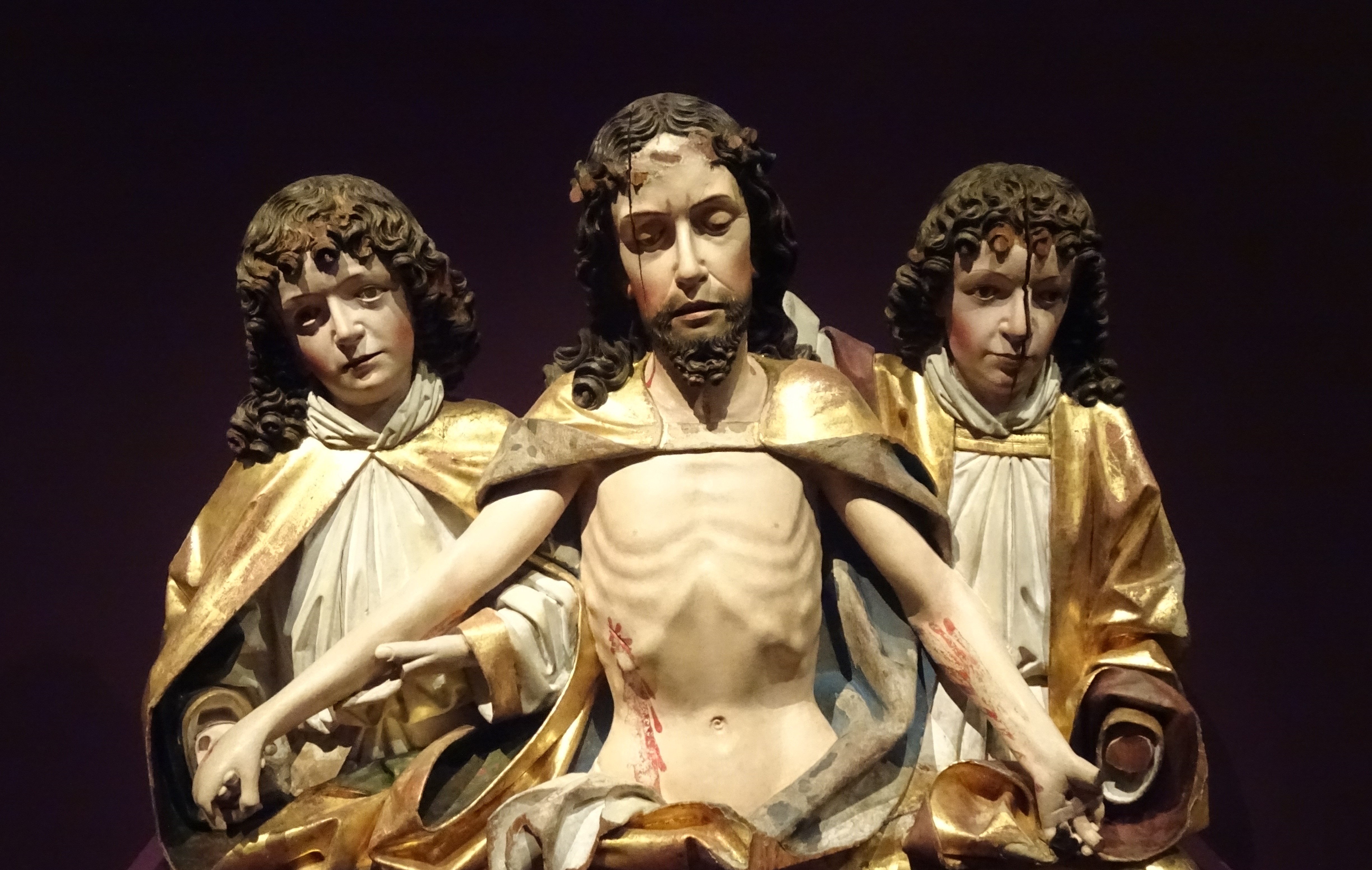
True Thanksgiving

The prayers and good wishes I received on the occasion of my nomination and blessing as abbot were truly overwhelming. I wish everyone could have a similar experience. When so many people think of you, send you good thoughts, and pray for you, it gives you incredible strength and support. Ultimately, this support comes from God, but it is conveyed through people, through friends. What if we could do this more often, pray for each other together?

At the same time, I felt the need to thank God and people. I felt that so much had been given to me personally and to my community that words cannot express this gratitude. Nothing can equal what I owe to God and the people who prayed for us. In this respect, the liturgy helps enormously. The Psalms help because they express what we cannot find words for. Many of them speak of the goodness of the Lord and sing of gratitude. They speak of sacrifices of praise and thanksgiving.

Nevertheless, I felt guilty because I did not sense that I was responding appropriately to what I had received. My ego was simply too small to take it all in, and too small to praise God and thank him for everything. But there was one consolation: that is why Jesus Christ came into the world. He is the true thanksgiving for us. He is the spotless sacrifice to God. Since we humans were unable to give God what we owed him, he sent his Son, who, as both man and God, was able to “give back” what was necessary, with his entire life. He redeemed what needed to be redeemed. This happens in the Holy Eucharist. Eucharist means “thanksgiving.” Jesus gives himself to the Father for us. Because our sacrifices and our thanks are not great enough, not pure enough, not adequate enough—they never will be, they will never suffice—he does it for us. He expects nothing in return. Only that we remember him and celebrate it: “Do this in memory of me.”

Dear Lord, there is so much for which we can be thankful. We have received so much from you. How wonderful it is that you pray for us. You are the true high priest. God, your Father, has accepted your sacrifice of thanksgiving. We are now reconciled with you. We no longer need to feel guilty. Your pure grace has given us all this. And it continues to do so.
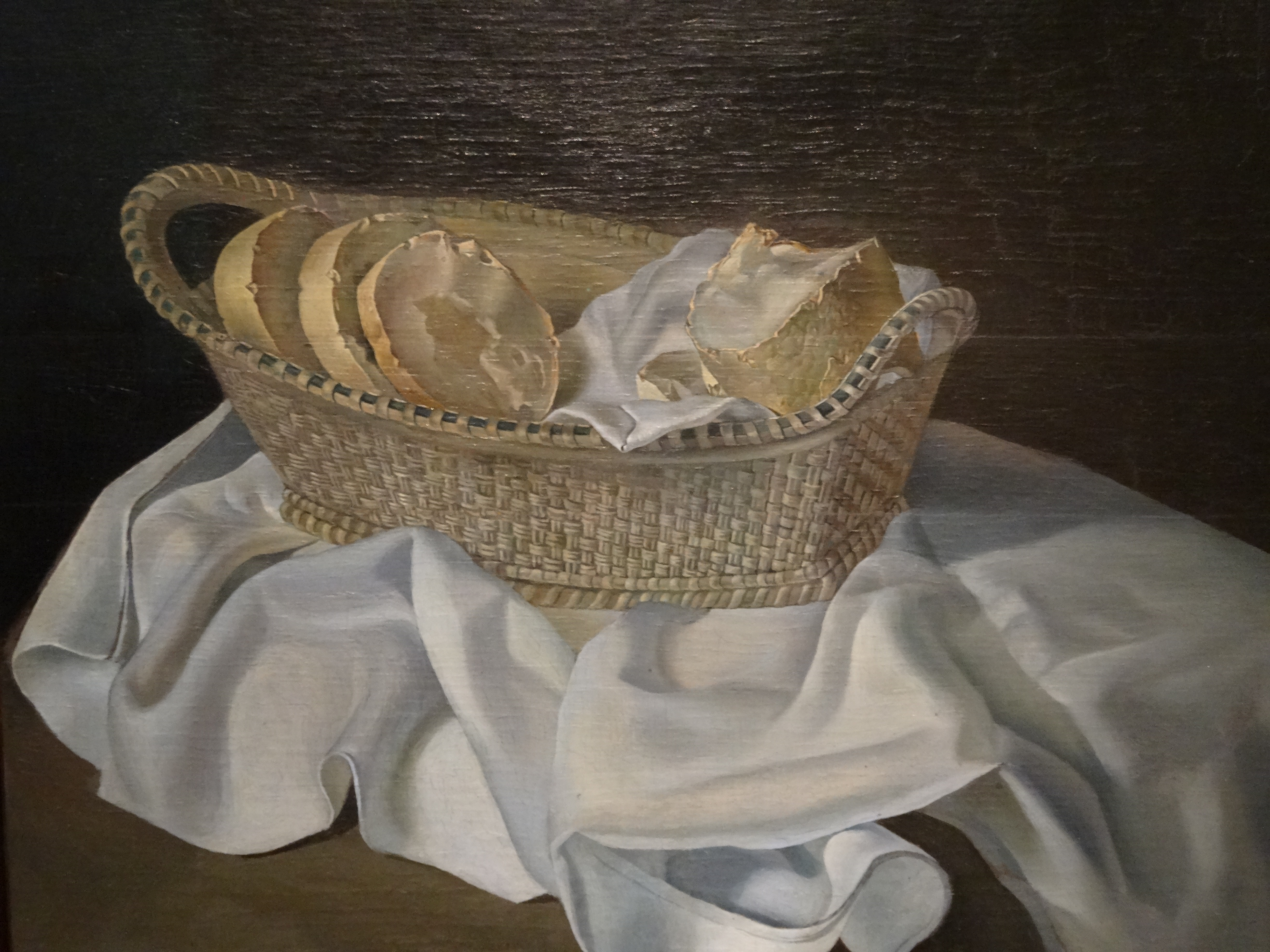
Without hope – what will the end look like ?

I recently met a woman in her early 60s who shared with me her concerns about political developments and the future. In view of the uncertainties of our time, her conclusion was: enjoy every day, make as much of it as you can while you are healthy, invest in your health and take each day as it comes. Then we talked about aging and the fact that as we get old, we may need care and assistance, some day. Two factors cloud this prospect: demographics – at least in some countries. Who will take care of us? There will be many more old people than young ones. We cannot expect our children to take care of us if they can at all. The other factor is certainly money: care will become more expensive, and our lives will be longer compared to previous generations. And then the woman said something to me that shocked me: if necessary, one would have to give dying a helping hand. I have heard this argument more often recently. There are countries where euthanasia has become more accepted and common, for example in Switzerland and the Netherlands. As much as life is endangered at the beginning, so it is now at its end.

If life is just consuming, enjoying, making the most of our days, one consequently will stop it when this objective cannot be fulfilled anymore. As I listened to this woman, I wondered how I would react in such a situation. There are already phases of suffering or pain in earlier years that, seen from this perspective, would not be worth living. What helped me during these phases? Prayer. The Eucharist. The conversation with God, to whom I can entrust all my thoughts and feelings. People who walk with me and hope with me. I wonder how this life can be bearable without faith, especially in difficult days. To be honest, I am not free of concerns about the future, but I hope that God, who gave me this life, will take care of me. With His help, I and we will find ways to live a dignified life until the day it ends. I realized once again how precious our faith is and how it changes our outlook on life.

Lord, let your angels be near all old people. Let them be cared for. Bless their lives, even when they no longer seem to have any meaning. Let us stand with respect for the suffering that an old person must endure. Who understood Your suffering on the cross when you were going through it, Lord? No one. And did it make sense in the end? More than make sense. My Lord, take away my fear. Let me never give up hope, for my life, for this world. Your future is not dark. Let me enjoy each day gratefully, with you. It is all grace.

Whatever you do with love

Sometimes we are not successful. Sometimes we have done things in vain. Sometimes we have put a lot of effort in something, but it did not turn out the way we wanted. There are many things that can interfere, the weather, stupid accidents, our health. Often it is the people who don’t go along what we had aimed for, our bosses, our colleagues. Sometimes it is the evil one who crosses out our plans. At times, it’s just ouselves who are too weak.

Our reaction to all of this is crucial. A first response could be immediate frustration, anger, even depression. And the question is: Why? Why not? Why me? The only salvation in these moments is to detach from the situation and try to look from the point of view of God. What would He say? What will he say, when he comes again? He will not only and not necessarily look at the outcome of our deeds, efforts, and dreams, he will look how we did all of this. Did we do it with love? Whatever we have done with love cannot have been in vain. Our love in itself was worth it. Even if people don’t see it, even if the fruit does not show, we acted out of the right motivation. A love you have spent for somebody or for a group has always an effect, even if it cannot be seen, yet.

We could approach our daily life in this way. It is enough if we do what we do with love. It will change me, it will change the world. “Faith, hope, love remain, these three; but the greatest of these is love,” says St. Paul (1 Cor 13:13). These three are never given in vain. If this would not be the case, the life, the passion, and the death of Jesus would have been totally without any sense. His mission ended without success. But because it was done out of love for his father, out of love for his brothers and sisters, his mission finally reached its goal, until today. If we follow him in these manner, our life will make sense, no matter what happens.

Lord, let me work to love more, every day. Let not a single day go by without a good deed done out of love, a faithfulness motivated by love, a creativity inspired by love. You are love, and I thank you that you love me. Help me not to forget to love myself. Come, o Holy Spirit of love!

Compassion for people with a face like flint

There is so much suffering in the world. Near and far. I think of the people in regions where there is war and terror. Many innocent people have to go through terrible things. Sometimes for a long time. A sentence from the third song of the Lord’s Servant in Isaiah comes to mind: “Therefore I have set my face like flint” (Isaiah 50:7). It is terrible when someone – in order to survive injustice and suffering – has to make their face as hard as stone. Just as Jesus did before Pontius Pilate. Normally our cheeks are soft and sensitive. I remember in my youth seeing mothers testing the temperature of their children’s milk bottles on their cheeks.

What can we, who are not affected by this fate, do when we see the suffering in the news, on social media or in our neighborhoods? At least we can let it touch our hearts. St. Paul says: “If one part suffers, all the other parts suffer with it.” (1 Cor 12:26) Let’s be compassionate! We can carry this suffering to the cross of Jesus on behalf of the suffering people. We can, like Mother Mary stand with her Son, beside the cross. As the ancient sequence Stabat Mater sings:

At the Cross her station keeping,
Stood the mournful Mother weeping,
Close to Jesus to the last. (…)

Is there one who would not weep,
Whelm’d in miseries so deep,
Christ’s dear Mother to behold?

Since the suffering must remain strong and apathetic, since they cannot allow themselves to be emotional or to cry, since they must make their cheeks hard, we can at least be touched by what they are going through. We can cry for them and hope that this cry reaches heaven.

Lord, let me learn and practice compassion. Look upon all those who suffer. Give them strength, give them hope, give them people to comfort them. Let their angels be with them. Let your holy suffering be their salvation.

Instagram vs Deep Beauty

I recently distributed Holy Communion during Mass in a small town. As in many places in Europe, most of the faithful are quite old. It is always touching for me to see the hands that are stretched out to receive the Lord, hands that have been worked through and worked off. The faces too – in many of them you can see – or at least guess – the traces that life has left on people, you can see the traces of much suffering. And they all come to find relief and healing and comfort and the companionship of Christ.

When I saw the faces of the faithful, the Instagram network came into my mind, and I thought that none of them would meet its standards. When you look around the social networks, you realize how much beauty there is. Many people, most of them young or at least not old, show themselves in all their natural beauty. Some of them use a little help to beautify their faces and bodies. Some really remind me of Greek statues, so much beauty can be seen – as invented by our Creator.

But worn-out ones you can hardly find on Instagram. The ones who want to hide. Those who don’t find themselves beautiful. Those who don’t have time to show themselves or simply don’t think it’s necessary. Many feel too old. But I thought: these here, in the church, are indeed the beautiful ones. There is a beauty in them that is extraordinary, that comes from real moments in life, that shows their authentic face (why and what should one hide from Christ?). There was a beauty that comes from within, that comes from the true self, that comes from love for God, that comes from the courage to show ourselves as we are, not to show off or make up or correct or compensate. Everyone is beautiful — if only we look for that beauty. It is there. God sees it. Jesus sees it. We can learn to see it. It’s a beauty that goes deeper than Instagram. It is perhaps … permagram …

Lord, thank you for all the beauty you have created. I thank you that I can come to you even with my unattractive sides. And I thank you for my brothers and sisters, from whom I have nothing to hide. Thank you for seeing the beauty in everyone.

How to Deal with Divisions – in Politics, Religion, and Family

During my vacation I had the opportunity to travel and talk to many people, people with different opinions and political and religious views. My impression was confirmed that the “fronts” are hardened. Even if you want to stay in the middle ground, there is a dynamic that pushes you into one bubble or the other. For the Church, this is certainly to her disadvantage. For our countries, it probably is also. So how can we deal with the fact that we are divided? I see three ways. They each depend on how I determine distance and closeness.

1.    I keep my distance from the other group. I do not want anything to do with them. I do not agree with their views and do not see any way I can reconcile that. I am not even willing to do that, because I am convinced that there is nothing to negotiate or agree on.

>> That’s fine. Only I would recommend applying Jesus’ word: Bless those who curse you (Luke 6:28), pray for those who persecute you (Matthew 5:44). Do not curse them, but bless them. From the distance, which is best for both at the moment, I throw a small blessing across the river, just asking the Lord: Please, bless them. And then I let the Lord do it, without engaging myself.

 2.   I don’t avoid the others. Maybe I can’t. And in some ways I don’t want to, maybe because the others are part of my family or we have had a good relationship in the past, a good history together.

>> I focus on what we have in common. On common goals. I leave aside what is different and appreciate that we have grown differently. It is what it is, right now. I don’t avoid it, but I keep focusing on the things that connect us. And enjoy them.

“Is Christ divided?” (1 Cor 12:13). No, he is not.

3.   If I have a very good relationship with someone; if I really respect and appreciate him or her, I dare to raise the controversial issue. I honestly say how I see things, always speaking of myself and my experiences. Then I listen to how the other person sees it. I do not necessarily look for a harmonious outcome of the discussion and am willing to suffer from the fact that we do not come together. But we are still together.

It is worth consciously discerning what kind of closeness or distance I want to have, respecting my intuition. In all three ways, I don’t break completely with the other side, at least in my thoughts. It is not easy to have love and truth together. But if we don’t try, the division will grow, and that will not be a good end for either me or the other.

When a house is divided against itself, the house cannot stand. (Mark 3:25)

Lord, it is you who can bring us together. Through your suffering, death, and ressurection you have set us free. Be with us all. Let me pray before I speak and act. Let truth prevail. Let love prevail. Your will be done.

Hilarious

Sometimes it’s just too funny. There are moments in children’s lives that are so hilarious; how they look, how they act, how they respond, what ideas they come up with. Years later, our parents would still remember these stories and share what we did when we were children. The kids might be exhausting, annoying, but suddenly there’s a moment when something funny happens, and they’re just hilarious.

I’ve wondered if we couldn’t keep that sense of love, reverence, and humor for adults as well. In communities we not infrequently get on each other’s nerves, could send people to the moon – what if we could look at them in that other way and just – smile? What makes us smile about children is that they are simply lovable in their imperfections. O how much would that help our community life? I always see that as a special grace when God gives me that moment that someone who is not going to be the next saint is just lovable in his imperfection. I’m not saying we should ridicule people, we do that too often. I’m not saying we shouldn’t make sure things are done right. But sometimes a situation is perfect just in its imperfection.

Lord God, I wonder if you smile at me sometimes? Accept me as I am, as your beloved child. Help me on my way to perfection. Let me accept my imperfections so that I can grow.

The more one is set above the rest

When St. Benedict speaks of the leaders in the monastery, the abbot, the prior, the treasurer, the priests, he does not spare stern words reminding the confreres of their responsibility. In times when power issues are at stake not only in the Church but also in organizations and nations, these passages of the Rule of St. Benedict are interesting. For example, he says about the prior:

“The more he is set above the rest, the more he should be concerned to keep what the Rule commands.” (RB 65:17)

The Rule is an instrument for controlling power.  It is not uncommon for people to be elected or appointed to leadership positions, in Church, politics and business, who do not follow the rules. People who violate boundaries and break rules meet with a lot of understanding. The reason: They seem to be strong. If they dare to break rules, they show that they are above the rules (and thus can control them in the future). This applies not only to laws and regulations, but also to everyday behavior: People who get up in the middle of a meeting to take a phone call; people who come late to a meeting or leave early – clearly, this shows how important they are. People who don’t speak on the topic that’s on the agenda, but bring up completely different things (that are in their interest, of course). People who disregard levels of communication and especially levels of hierarchy by bypassing people who should be informed or addressed first; people who disrespect evolved structures in an organization; people who say “Why shouldn’t I break a rule when I can just say ‘sorry’ afterwards?” All of these behaviors fall on fertile ground and are especially attractive when there is fundamental dissatisfaction in a group. Either the rules are no longer appropriate, or they are not being followed anyway.

For St. Benedict, following the rules is rather a qualification for more responsibility. My experience is that – at least in organizations that are not totally corrupt – the problem is that the rules are not followed. A simple but painful example is all the cases of abuse in the Church. The problem was not the rules, but the breaking of the rules. If we allow people whom St. Benedict calls “despisers of the Rule” (RB 65:18) to be in charge, an organization or community can never heal because it has given power to a narcissist.

Dear God, our communities need good leaders. Protect us from people who want to serve only themselves. Let us respect your commandments. Let us play with the rules that a community has given itself with good intentions. Let us learn to be humble when rules bother us, and let us show respect for our brothers and sisters.

What Creates Peace

The Benedictines strive for peace. Because living close together and not having peace is unbearable. What are the elements that help us live in peace? St. Benedict says in his Rule: “If you have a dispute with someone, make peace with him before the sun goes down.” (RB 4:73) It is important to address conflicts as soon as possible and not to allow the problems to accumulate. They are like a poison or become into a tension that one day explodes. That’s why we ask ourselves every night: What did I do wrong? With whom do I need to seek reconciliation? In the morning we celebrate Mass. Jesus warns us to lay down the gifts and not to celebrate if there is not yet peace with a brother or sister (Matthew 5:23-24).

Part of making peace is to forgive. May brothers and sisters don’t always treat me well. But just as they make mistakes, so do I. That is human. In order to continue to live together, I have to forgive them. If I don’t do that, not only the relationship suffers, but also I myself: I am not at peace. We can forgive each other because we know that God constantly forgives us. He forgave us first. Sometimes conflicts are so old, so deep, so complicated that we can’t just forgive in the evening. But we can pray that one day God will give us the gift to be able to forgive. It is a grace to be able to forgive.

Peace cannot not be achieved without justice. “Justice and peace will kiss each other,” says the Psalm (85:11). Reconciliation cannot happen without first looking at the facts and at the truth. This is another way to peace: to have the courage to look at the truth and to disclose it. To confront oneself and – when the time is right – the other person with the truth. Correcting each other (correctio fraterna) in addressing each other’s problems. As paradoxical as it sounds: Not avoiding conflict is also a way to peace. Otherwise, there will be a false peace, as Benedict puts it (RB 4:25). In any case, peace is a great gift from God. We should pray for it. Especially in these days.

Dear God, listen to the cry of so many people suffering from war. Look at situations where hope is lost. Help us to strive for peace in our small world, which I can influence. Give me inner peace so that it radiates from me to those around me. Let me stay close to you, because you are the source of faith, hope, love, and peace. Amen.

Only 10%

This blog post is for all those who like to give themselves away. Who like to help others, support them in any way, financially, psychologically, … but also for all those who sometimes give too much of themselves.

We are called to give ourselves as God gave Himself at the birth of Jesus, as Jesus gave Himself on the cross. He held nothing back. So in looking at Jesus, the bar for giving is set high. However, turning briefly to the Old Testament, we hear that Abraham gave his tithe to Melchizedek the priest (Gen 14:19-20); Jacob made a vow to give back 10% of everything he received from God (Gen 28:20-22); and everyone was to tithe in whatever form, animals, fruit, etc. (Lev 27:30-32). 10% sounds little against 100%. But 10% is a whole lot. If we all gave 10% of our time, resources and money to others instead of keeping it for ourselves, the world would be a better place. I wonder if we can give 100% at all. Jesus could, because he was the Son of God; his resources, at least in his divine nature, were infinite. Certainly, as a man, he gave everything, himself, his life. But he never forces us to do the same. There may be people, priests, religious, pious men and women, who try to give everything. But do they give everything? I like the idea of 10%. And if God calls you to it, you can give more.

We are invited to give because we have received so much from God. Tithing is a sign of gratitude. It emphasizes that we have no “right” to receive from God, but that it is His free gift of love. He wants us to be equally loving. You can’t measure that with a number. You can give 10% and still have a hardened heart. But I like the concreteness of that number.

It remains true what Luke writes: “Remember the words of the Lord Jesus, who himself said, ‘It is more blessed to give than to receive.'” (Acts 20:35) It is wonderful to be able to give. But having a target number can also be an expression of charity toward ourselves. It is a protection for those who usually give too much without taking care of themselves. Let’s start with 10%! Once we have done that, we understand how much 100% is.

Dear God, your generosity is boundless. You wish us the best in a way that no one else can. You love us more than we can love ourselves. I thank you for this love of yours.

Giovanni di Balduccio (1328): Charity