What Can God Do For You?

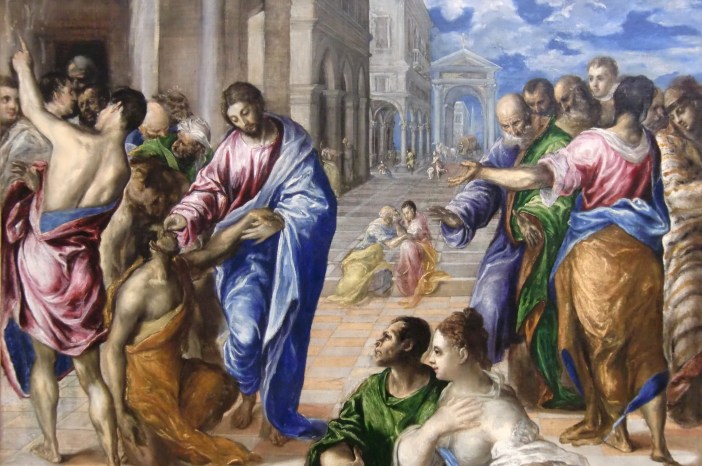
Jesus sees the blind man and asks: What do you want me to do for you? (Mk 10:51) Does he not realize that the man wants to regain his eyesight? How can he be so un-sympathetic? We encounter here the difference between being sympathetic and empathetic. Being sympathetic is feeling compassion and pity for another, which is a good thing, but the empathetic puts himself in the place of the other without mingling his own ideas, advice or even personal issues with the one in need. “I feel so sorry for you. You know, I once had the same problem; this is how I would solve it …” Empathy, instead, stands respectfully before the other individual. St. Benedict says in his Rule:

Precaution must be taken that no monk presume on any occasion to defend another in the monastery [præsumat alter alium defendere] or as it were to take him under his protection, even if they are related by the closest ties of blood.  Rule of St. Benedict 69:1

What sounds harsh is rather St. Benedict trusting deeply that Christ dwells in everyone so that His life, His truth, and His grace will finally come forward and prevail. We tend to make the case of others our own case very quickly. We band together and fight for certain goals, often as long as our lives are not really touched. We don’t notice that we do our own thing, assuming and presuming. Jesus acts differently. He truly tends to the person and gets involved, but lets the blind man still have the control. He is not patronizing him. Empathy respects boundaries. It is not me who knows best what the other needs. It is he or she herself. Or shouldn’t we rather say: it is God. Like Jesus we can become channels of God’s love for others. If the blind man sadly would prefer to stay blind, Jesus would respect it. Jesus follows whatever the man wants God to do for him.

Christ, help me to listen. What is my brother, my sister actually saying when they talk to me? What does the other really need? Let me respect the intimacy that is between you and him. Let me be engaged to the fullest and at the same time stay totally out of the way, and mind my own business. I don’t have the answer. You have it. You will care for him as you care for me.

For Whom the Bell Tolls

St. Gabriel Mission LA 2016 (26) - Copy

I was working at my desk trying to finish up something when the bell rang. That is nothing special in a monastery; the bell rings five times a day to call us monks to prayer. This time, though, as sometimes happens, I caught myself having a little inner discussion:  should I go instantly to Midday Prayer, or should I rather continue working for two or three minutes? I would still make it to church in time. What didn’t seem to be a big deal at all, and certainly not a question of life and death, is still of interest for Saint Benedict:

“On hearing the signal for an hour of the divine office, the monk will immediately set aside what he has in hand and go with utmost speed, yet with gravity and without giving occasion for frivolity. Indeed, nothing is to be preferred to the Work of God.” RB 43:1-3

My father used to say: “Obedience means: do it immediately”. I didn’t like to hear that because he always said it when I was not following right away. This very moment, when I hear the call of the bell, holds a great opportunity. It invites my soul to decide: Do I follow God’s call or not? Whom do I follow? Christ, or my own to-do-list? “The first step of humility is unhesitating obedience, which comes naturally to those who cherish Christ above all”, St. Benedict says in his chapter on obedience (RB 5:1-2), and he points to this holy moment:

“Almost at the same moment, as the master gives the instruction the disciple quickly puts it into practice in the fear of God; and both actions together are swiftly completed as one”. RB 5:9

In the midst of my day-to-day activities I am offered to let my ego die and become ONE with God. The readiness with which I follow is an expression of my surrendering to God. No excuses; nothing more important than Him; everything to be left behind. What if I miss the opportunity of this moment? In the monastery, we are not practicing compulsiveness. Not much later the bell will ring again for another prayer time. Another chance to follow the inner voice, the conscience. Another chance to surrender.

Lord, you praised the Roman officer because of the swiftness of his following. Give me the freedom to trust deeply that nothing is more important NOW than YOU. It is so freeing to follow you. Thank you for the bell. It tolls for me.