Our Struggles … in the Heavens

Some things we experience are so disturbing, for example battles between peoples, the arising of wars, but also fights between individuals, and even struggels within ourselves, that it is difficult to find an explanation, a way to understand. In this distress, the Bible offers a way of interpretation:

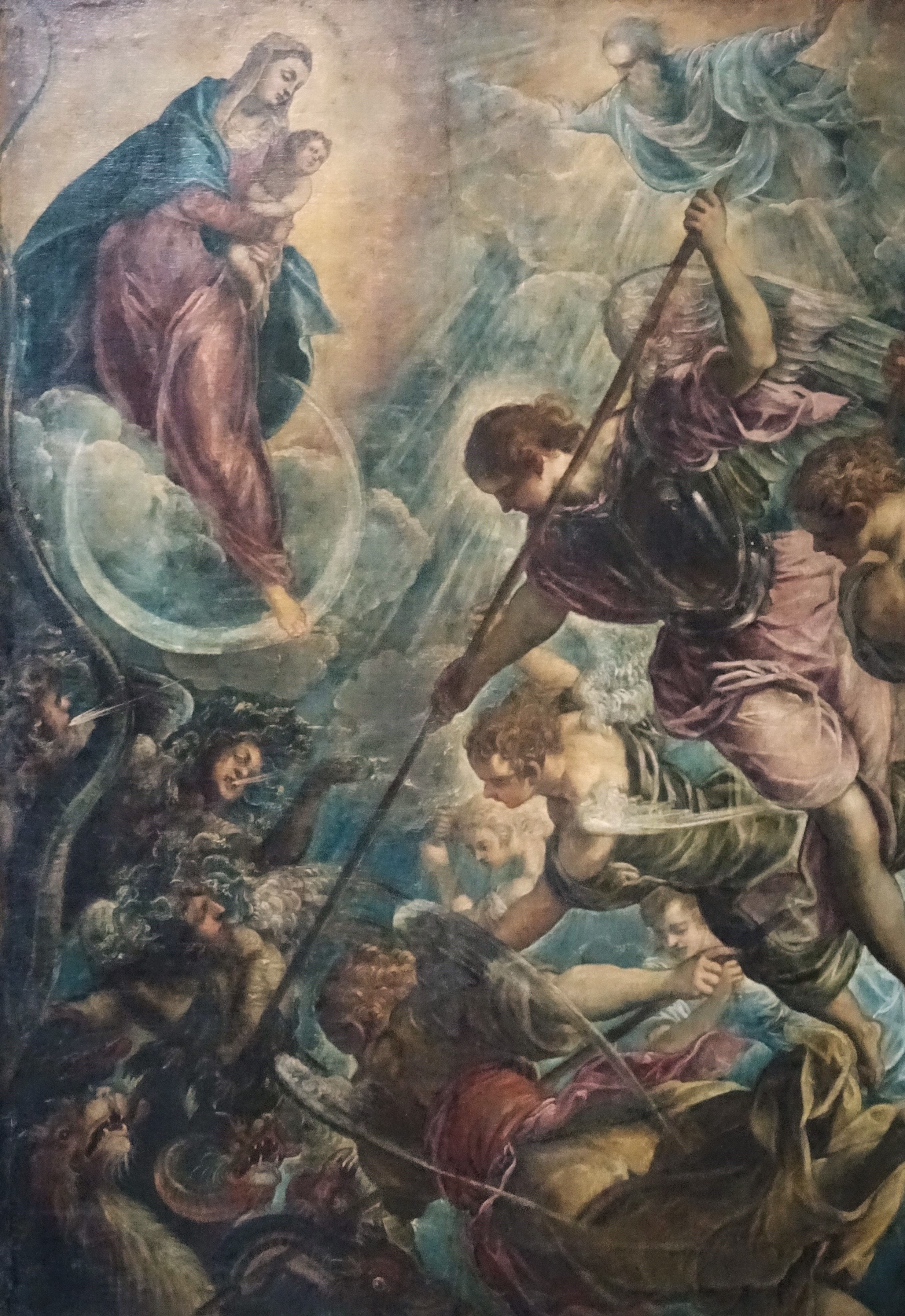
“For our struggle is not with flesh and blood but with the principalities, with the powers, with the world rulers of this present darkness, with the evil spirits in the heavens.” (Eph 6:12)

The enormity of strife and terror can be so overwhelming that an explanation within the framework of our worldly categories is not sufficient in order to comprehend and understand. It is some consolation for us to believe that what is fought out on earth has a counterpart in the spiritual worlds, in the heavens.

“I have seen Satan fall like lightning from heaven”. (Lk 10:18), Jesus said when he rejoiced that his disciples could cast out demons in his name. If this is so, then when we see a hopeless situation on earth, we can turn to our Lord Himself to help us with His spiritual powers and fight the evil from above. This will make all the difference. We can ask him to send his Holy Spirit, whose fruit is peace, joy, gentleness, patience, and self-control, and who is stronger than any evil spirit. And we can turn to Mary, the Mother of God; at the birth of her Son angels proclaimed peace on earth. May she also intercede for us from heaven.

Holy Mary Mother of God, Mother of Grace, You are called the Queen of Peace. We bring you the whole of humanity with its fears and hopes and we ask you: Guide us all in our search for freedom and justice. Guide the steps of all people on the path of peace. Be close to those who suffer and those who flee. Be close to those who govern us to dare to take the steps of peace. O Mary, Mother of God and our Mother!
How to Deal with Divisions – in Politics, Religion, and Family

During my vacation I had the opportunity to travel and talk to many people, people with different opinions and political and religious views. My impression was confirmed that the “fronts” are hardened. Even if you want to stay in the middle ground, there is a dynamic that pushes you into one bubble or the other. For the Church, this is certainly to her disadvantage. For our countries, it probably is also. So how can we deal with the fact that we are divided? I see three ways. They each depend on how I determine distance and closeness.

1.    I keep my distance from the other group. I do not want anything to do with them. I do not agree with their views and do not see any way I can reconcile that. I am not even willing to do that, because I am convinced that there is nothing to negotiate or agree on.

>> That’s fine. Only I would recommend applying Jesus’ word: Bless those who curse you (Luke 6:28), pray for those who persecute you (Matthew 5:44). Do not curse them, but bless them. From the distance, which is best for both at the moment, I throw a small blessing across the river, just asking the Lord: Please, bless them. And then I let the Lord do it, without engaging myself.

 2.   I don’t avoid the others. Maybe I can’t. And in some ways I don’t want to, maybe because the others are part of my family or we have had a good relationship in the past, a good history together.

>> I focus on what we have in common. On common goals. I leave aside what is different and appreciate that we have grown differently. It is what it is, right now. I don’t avoid it, but I keep focusing on the things that connect us. And enjoy them.

“Is Christ divided?” (1 Cor 12:13). No, he is not.

3.   If I have a very good relationship with someone; if I really respect and appreciate him or her, I dare to raise the controversial issue. I honestly say how I see things, always speaking of myself and my experiences. Then I listen to how the other person sees it. I do not necessarily look for a harmonious outcome of the discussion and am willing to suffer from the fact that we do not come together. But we are still together.

It is worth consciously discerning what kind of closeness or distance I want to have, respecting my intuition. In all three ways, I don’t break completely with the other side, at least in my thoughts. It is not easy to have love and truth together. But if we don’t try, the division will grow, and that will not be a good end for either me or the other.

When a house is divided against itself, the house cannot stand. (Mark 3:25)

Lord, it is you who can bring us together. Through your suffering, death, and ressurection you have set us free. Be with us all. Let me pray before I speak and act. Let truth prevail. Let love prevail. Your will be done.

What Creates Peace

The Benedictines strive for peace. Because living close together and not having peace is unbearable. What are the elements that help us live in peace? St. Benedict says in his Rule: “If you have a dispute with someone, make peace with him before the sun goes down.” (RB 4:73) It is important to address conflicts as soon as possible and not to allow the problems to accumulate. They are like a poison or become into a tension that one day explodes. That’s why we ask ourselves every night: What did I do wrong? With whom do I need to seek reconciliation? In the morning we celebrate Mass. Jesus warns us to lay down the gifts and not to celebrate if there is not yet peace with a brother or sister (Matthew 5:23-24).

Part of making peace is to forgive. May brothers and sisters don’t always treat me well. But just as they make mistakes, so do I. That is human. In order to continue to live together, I have to forgive them. If I don’t do that, not only the relationship suffers, but also I myself: I am not at peace. We can forgive each other because we know that God constantly forgives us. He forgave us first. Sometimes conflicts are so old, so deep, so complicated that we can’t just forgive in the evening. But we can pray that one day God will give us the gift to be able to forgive. It is a grace to be able to forgive.

Peace cannot not be achieved without justice. “Justice and peace will kiss each other,” says the Psalm (85:11). Reconciliation cannot happen without first looking at the facts and at the truth. This is another way to peace: to have the courage to look at the truth and to disclose it. To confront oneself and – when the time is right – the other person with the truth. Correcting each other (correctio fraterna) in addressing each other’s problems. As paradoxical as it sounds: Not avoiding conflict is also a way to peace. Otherwise, there will be a false peace, as Benedict puts it (RB 4:25). In any case, peace is a great gift from God. We should pray for it. Especially in these days.

Dear God, listen to the cry of so many people suffering from war. Look at situations where hope is lost. Help us to strive for peace in our small world, which I can influence. Give me inner peace so that it radiates from me to those around me. Let me stay close to you, because you are the source of faith, hope, love, and peace. Amen.

Making the Pontifex

How important it is at this moment to build bridges. We see divisions in our societies on the macro and on the micro level. Jesus encourages us to build bridges when he says: “Blessed are the peacemakers” (Mt 5.9). How do we realize His task?

Often, we forget that building bridges is an activity. It is hard work. One must use hands and head, get moving and start working. You must get your hands dirty. It is a building process and not a one-strike-does-it-all thing. Which bridge has ever been built overnight? Secondly, building bridges requires our entire involvement. You cannot stay outside and be just a nice observer. Why? Because a bridge begins on one side and ends on the other. The builder must be active on both ends. As bridge builder you must listen to both sides. You need a lot of patience. At times you need much courage, especially if the parties are aggressive. You need to try to understand both sides. This includes a certain loneliness–trying to show solidarity with both parties makes one feel lonely. The parties have not walked over the bridge yet, while you are still constructing and helping them to find a way to each other. You must be compassionate and neutral at the same time.

It sure makes a difference if the point of contest does not really touch me. In this case it is easier to stay neutral and help the parties to find their way. It is their responsibility. It becomes more difficult to be peacemaker and bridge builder if we are on one side or are part of one party. We must get out of our own way to find the middle ground. I think this detachment is possible with the backing of Jesus’ promise: “My peace I give to you. Not as the world gives do I give it to you.” (John 14:27) Staying in a conflict helps us to become humble as we learn that peace is a gift.

The Holy Father in Rome, the Pope, has the title “pontifex maximus”: greatest of all builders of bridges. Building bridges, however, is a job for all Christians. Each of us is invited to help bring peace and reconciliation: leaders, parents, teachers, pastors, each of us. We can try to be at least a “pontifex minor”.

Jesus, you brought peace to the world. Your presence brought understanding, consolation, clarification, truth, justice, healing. You knew how to include human beings of all ways of life. You bridged the abyss between God and man and brought reconciliation. You still do it these days in your church and in the world. Help us to help you spread peace. We are small and weak. With your help, we can do it. Let us do the work!